
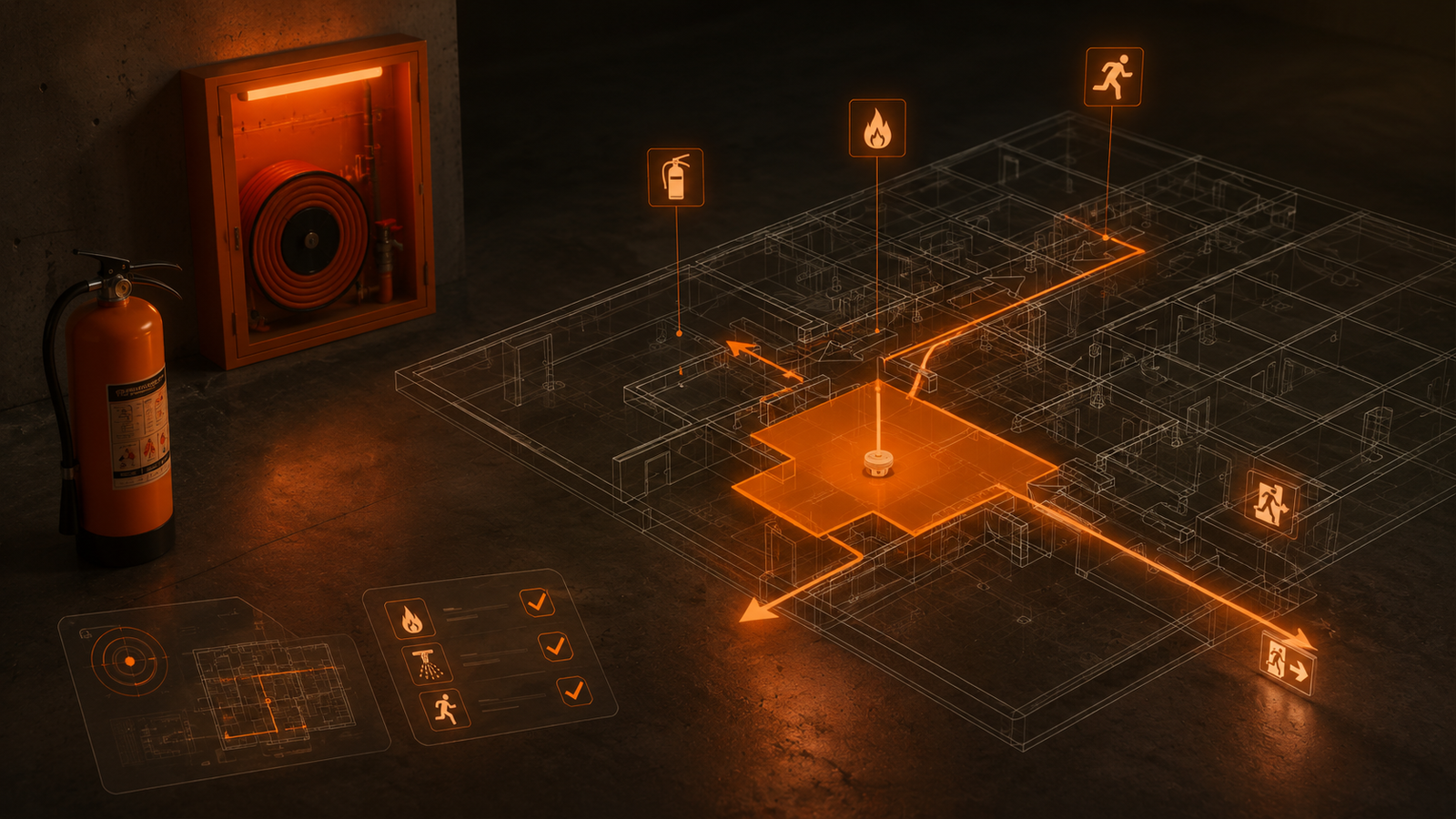
Fire safety, from design to execution
Fire-safety engineering for industrial, commercial and residential buildings.
On this page
Overview
Our Fire Safety (SCIE) practice covers the project lifecycle in full: from rigorous risk assessment and the sizing of active and passive systems, through the development of self-protection measures and technical audits.
Our methodology ensures that critical safety data — such as compartmentation, evacuation routes and fire resistance — is designed from the outset to meet present and future demands. Whether the challenge lies in addressing complex industrial scenarios (such as ATEX atmospheres and risk management) or in integrating these parameters within a digital ecosystem (BIM/IFC), we structure the project to deliver greater interoperability and to mitigate incompatibilities and entropy, from the conceptual phase through to execution.
Scope and ANEPC Accreditation
With a commitment to transparency, we set out our regulatory positioning and scope of action:
- Delivery Capability: Development of SCIE design projects and self-protection plans anchored in technical rigour and best engineering practice.
- ANEPC Accreditation: We are accredited by the National Authority for Emergency and Civil Protection (ANEPC) to sign off projects in risk categories 2, 3 and 4. This accreditation consolidates our formal capability to take on the full certification cycle for high-complexity assets.
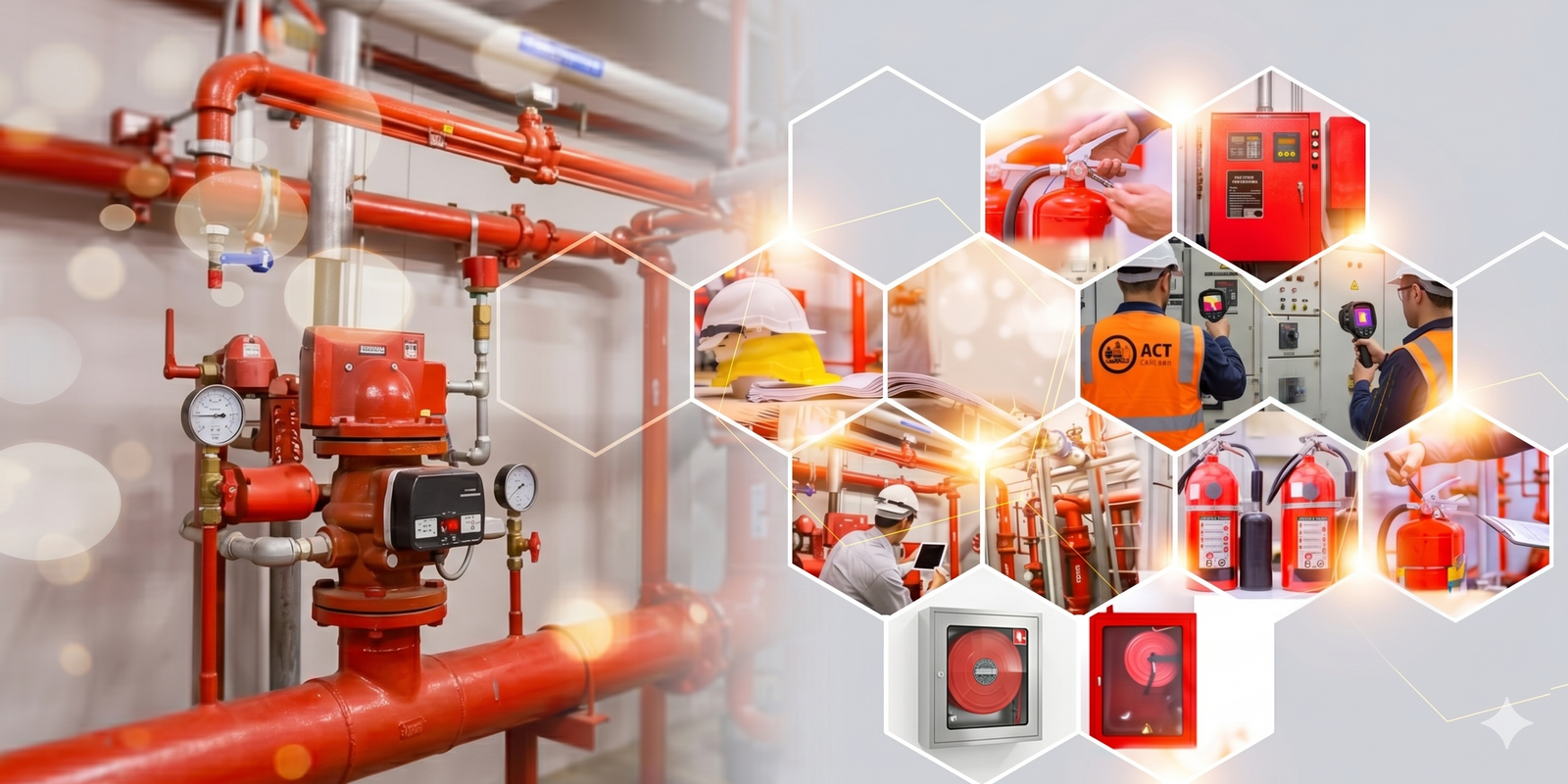
Capabilities and Deliverables
- SCIE Specialist Design — full development of technical design projects, precisely tailored to the asset.
- Risk Engineering (FSE — Performance-Based Design) — performance-based approach for assets where technical rigour is essential.
- Compartmentation, Evacuation and Safety — rigorous study and definition of fire compartmentation, evacuation routes and assessment of material fire behaviour and reaction.
- Sizing of Active and Passive Systems — technical studies and sizing of detection and alarm systems, automatic suppression networks (water, gas, sprinklers, foam) and smoke control.
- Self-Protection Measures (MAP) — preparation of prevention, emergency and evacuation plans grounded in best practice and technical rigour.
- SCIE Consulting and Auditing — execution of audits, technical inspections and specialist support in managing processes with ANEPC.
Regulatory and Standards Framework
- National Legal and Technical Regime — DL no. 220/2008 (RJSCIE), Ordinance no. 1532/2008 (RTSCIE) and the relevant ANEPC dispatches applicable to the various Use-Types (UT I to XII).
- Safety and Evacuation Standards — EN ISO 7010 and ISO 3864 (emergency signage and referencing).
- Suppression Systems (International References) — EN 12845 and NFPA guidelines (e.g. NFPA 13 for sprinklers).
- Industrial Risk and Explosive Atmospheres — ATEX Directives (2014/34/EU and 1999/92/EC), ensuring seamless transition and compatibility with our Process Engineering practice.
Sectors of Activity
- Industry and Logistics — processing units, storage and facilities with classified zones (ATEX).
- Retail and Services — retail spaces, office buildings and infrastructure with high public concentration.
- Tourism and Hospitality — hotels and food-service venues subject to high standards of demand and safety.
- Residential — multi-scale residential buildings, framed by the relevant risk categories.
Our Methodology
-
1. Assessment and Diagnosis
Comprehensive characterisation of the Use-Type (UT), determination of the risk category and rigorous survey of the conditions, processes and constraints of the infrastructure.
-
2. Engineering and Sizing
Preparation of the descriptive memorandum, drawings and sizing of systems (active and passive) in strict compliance with RJ-SCIE and RT-SCIE.
-
3. Operation and Resilience (Self-Protection)
Project transition into the operational phase of the asset. We develop the Self-Protection Measures (MAP), emergency plans and enable client teams through risk awareness.
-
4. Auditing and Monitoring
Continuous conformity assurance. We provide direct technical support during ANEPC inspections, perform periodic audits and ensure documentary upkeep of the installation.
Licensing and the safety of your asset start with the right diagnosis.
Tell us briefly about the nature and scale of your project. Our team will prepare a preliminary regulatory framing and present a technical proposal with rigorous scope and estimate.